
About gmwebservices

This author has not yet filled in any details.
So far gmwebservices has created 14 blog entries.

Commercial Insurance Strategy: A Core Part of Asset Management

Commercial property owners across DFW, and nationwide, have been navigating rising insurance costs for several years now. Since 2020, premiums have increased steadily due to weather-related losses, rising construction costs, and a shrinking pool of carriers. As we move through 2025, it’s clear: this is not a short-term correction. It’s a structural shift in how the insurance market operates.

For owners and asset managers, insurance can no longer be treated as a routine renewal or passive line item. In today’s market, a proactive and strategic approach to insurance is essential to maintaining performance, protecting NOI, and supporting long-term asset planning.

Understanding the Pressure in Today’s Market

DFW is one of the most heavily impacted markets due to a unique combination of factors:

  • Severe weather volatility – Hailstorms and high winds have made North Texas one of the most loss-intensive regions in the country.
  • Construction cost inflation – Higher replacement costs are increasing premiums across all property types.
  • Carrier contraction – Many insurers have exited or capped policies in high-risk areas, resulting in an unprecedented number of non-renewals.
  • Reinsurance pullback – Global reinsurers are tightening capacity, driving up premiums even in lower-risk regions.

While these issues are national in scope, DFW’s exposure profile has placed it on the front lines of the hard market.

Why a Passive Approach No Longer Works

Many owners have historically relied on the same broker and simply renewed coverage year after year with minimal review. In the current environment, that strategy presents significant risk.

  • Premiums are rising by 20–40% annually in many markets.
  • Carriers are non-renewing policies, often with little notice.
  • Underwriting timelines are longer, with stricter requirements and more documentation needed.

Even in NNN leases where tenants reimburse insurance expenses, ineffective planning can impact NOI and disrupt tenant relations.

Key Strategies for Today’s Insurance Environment

To manage risk and control costs, we recommend a more deliberate and structured approach:

1. Start Early and Shop Broadly

Initiate renewals 60-90 days in advance and work with brokers who have access to both admitted and non-admitted carriers, particularly those who understand market variations across regions.

2. Request Loss Runs Immediately

If you’re planning to explore new quotes or change carriers, request your loss runs as early as possible. These are required by underwriters and often cause delays if not secured promptly.

3. Reevaluate Deductibles

Adjusting wind/hail deductibles, such as increasing from 1% to 2% or 5%, can generate significant savings. However, this should be carefully modeled against your risk tolerance and capital reserves.

4. Review Exclusions and Sub-Limits Closely

Policy exclusions have become more common. Be aware of:

  • Cosmetic roof damage exclusions
  • Ordinance & law limitations
  • Named-storm deductibles
  • Water intrusion caps

Ensure that your policy terms still meet lender requirements and adequately protect your asset.

5. Invest in Risk Mitigation

Underwriters continue to favor well-maintained, lower-risk assets. Consider upgrades such as:

  • Fire suppression systems
  • Monitored alarms and security systems
  • Certified roof inspections
  • Documented preventative maintenance programs

These enhancements can improve your insurability and reduce long-term claims exposure.

Communication and Budgeting Are Just as Critical

Even when insurance costs are passed through to tenants, transparent communication is key. Providing context, data, and proactive messaging helps maintain tenant trust and minimizes pushback.

From a financial standpoint, budgeting needs to reflect today’s realities. Flat year-over-year estimates are a thing of the past! Owners should model 20–30% increases, particularly for assets in high-risk regions or those with legacy coverage terms expiring.

Looking Ahead

The volatility we’ve seen in commercial property insurance is not temporary. It reflects broader shifts in underwriting risk, climate exposure, and global reinsurance dynamics.

To succeed in this environment, insurance must be treated as a strategic pillar of your asset management plan.

  • Shop thoroughly
  • Structure thoughtfully
  • Communicate proactively

Exploring Captive Insurance Options

At NorthBridge, we are currently evaluating a Single-Cell Captive Insurance Strategy. Over the past five years, captive insurance programs have helped owners retain more than $9.4 billion that would have otherwise gone to traditional carriers.

If your portfolio pays over $500,000 annually in insurance premiums and has a strong loss history (few claims), forming a captive may provide long-term cost stability, greater control, and profits on invested premiums.

I will provide Captive program updates as we navigate the complexities of this process! Feel free to reach out to me directly with any questions.

By |2025-06-25T20:52:57+00:00June 25, 2025|Rebecca Andreasen|Comments Off on Commercial Insurance Strategy: A Core Part of Asset Management

Occupancy vs. Revenue: Striking the Right Balance

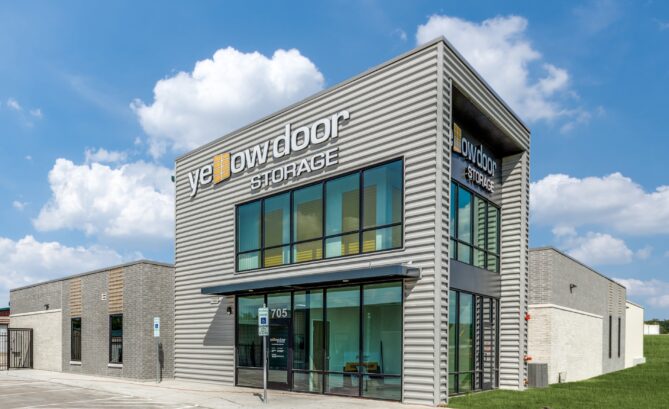
In today’s dynamic self-storage landscape, the balance between occupancy and revenue has become a sophisticated dance driven by data, market trends, and customer experience. Operators who effectively manage this balance can not only maximize short-term cash flow but also enhance long-term property value.

Occupancy vs. Revenue: A Strategic Tradeoff

While it’s tempting to chase higher rents in every scenario, many seasoned operators recognize that occupancy itself can be a key driver of property value. A fully or nearly completely occupied facility often translates to higher appraisals, greater stability, and more predictable income streams – factors that are increasingly important to investors and lenders alike.

Strategically, this means sometimes opting for slightly lower rents or offering move-in specials to keep units filled, particularly in competitive or soft markets. The goal is long-term value creation, not just short-term gains.

Market-Specific Strategies: No One-Size-Fits-All

Every market has its own rhythm. For example, facilities in underserved areas with limited competition can often command higher rates without sacrificing occupancy. Conversely, in oversaturated markets, aggressive pricing or promotional strategies may be necessary to stand out.

Operators must remain agile, constantly analyzing local trends and adjusting their approach. What works in one metro area may be completely ineffective in another.

Seasonal Dynamics: Timing Is Everything

Understanding seasonal demand is another critical piece of the puzzle. In most markets, the prime move-in season occurs between May and July. Operators often use this period to optimize rates, knowing that increased demand allows for stronger pricing power.

To stay ahead of these cycles, many rely on early indicators such as search volume data from platforms like Google Trends. These insights help forecast demand and appropriately time marketing spend or pricing adjustments.

Promotions That Work: Beyond Deep Discounts

Move-in specials are a common tool to boost occupancy, but their success depends on more than just the size of the discount. Operators have found that offering incentives such as multi-month discounts, auto-pay enrollment perks, or tenant protection plans can be just as effective – especially when paired with a seamless rental experience.

Ultimately, the ease and convenience of the rental process (particularly online) can have a greater impact on conversion than the promotion itself. A smooth digital leasing experience builds trust and encourages prospects to follow through, even if the incentive is modest.

Conclusion

Effective occupancy management in the self-storage industry is a nuanced process that requires a deep understanding of both customer behavior and local market dynamics. Operators who can skillfully navigate this terrain – leveraging data, timing, and customer-centric incentives – are well-positioned to enhance both immediate performance and long-term asset value.

By |2025-07-24T17:49:11+00:00June 5, 2025|Kevin Michels|Comments Off on Occupancy vs. Revenue: Striking the Right Balance

Why Real Estate is Still the Best Hedge Against Inflation

Why Real Estate is Still the Best Hedge Against Inflation, If You Buy Right

In an environment where prices keep climbing and every dollar buys a little bit less, investors are right to ask: What still holds its value?

For decades, commercial real estate has been one of the most reliable hedges against inflation – and that hasn’t changed. But like any asset, it only works if you approach it strategically.

Inflation Can Be a Friend, If You’re on the Right Side of the Table

When inflation rises, so do replacement costs, construction costs, and, eventually, rents. That’s bad news for tenants and developers starting from scratch, but it can be great news for owners of existing, well-located properties.

In most asset classes, inflation eats away at your returns. In commercial real estate, it can drive them. Why? Because as your expenses rise, so does the value of your lease income, especially with leases that have built-in rent escalations or are tied to CPI.

Hard Assets Beat Paper Promises

Owning a physical asset like real estate gives you something that can’t be printed, manipulated, or erased. Land doesn’t disappear. Buildings, if maintained, appreciate with time and demand.

In a world flooded with dollars, owning the right kind of “dirt” is a time-tested way to protect wealth, and in many cases, grow it.

The Key Phrase: If You Buy Right

Not all real estate is created equal. A bloated office building with long-term leases to outdated tenants isn’t going to ride the inflation wave the same way as an industrial property in a high-growth corridor.

Here’s what I’m looking for right now:

  • Triple Net Leases (NNN): Tenants cover taxes, insurance, and maintenance. That keeps expenses predictable as inflation rises.
  • Strong Rent Escalations: 3-5% annual bumps or CPI-indexed increases protect yield.
  • Location, Location…Exit Strategy: Not just “good areas,” but properties in markets where growth is real, not just projected.

Bonus: Real Estate Gives You Levers

You can’t call the CEO of a mutual fund and ask them to cut costs or boost returns. But with a real estate asset, you have levers—lease negotiations, value-add improvements, new revenue streams, tax strategies.

That level of control is worth a lot, especially in volatile economic times.

Bottom Line

Inflation isn’t going away anytime soon. But that doesn’t have to be a bad thing.

If you’re thoughtful about what you buy, how you structure it, and how you manage it, commercial real estate remains one of the best tools available to preserve and grow wealth in any market.

If you’re interested in what that looks like in practice, I’m happy to share what we’re doing at NorthBridge, and how we’re helping investors ride the current wave with confidence.

By |2025-05-22T17:30:48+00:00May 20, 2025|Brad Andrus, Uncategorized|Comments Off on Why Real Estate is Still the Best Hedge Against Inflation

Protect It Like A Pro: The Secret Weapon for Commercial Asset Longevity…Why Preventative Maintenance is the Unsung Hero of Commercial Asset Value Preservation

In the fast-paced world of commercial asset managers we face one undeniable truth: neglect today leads to more costly tomorrows.   Preserving the value of commercial properties is about proactively maintaining all aspects of the asset to avoid unnecessary depreciation and financial drain. A well-executed preventative maintenance plan is the silent force working behind the scenes to ensure properties remain profitable, operational, and competitive in the market.

The Secret to Long-Term Asset Longevity

Think of a commercial building as a living, breathing entity—just like us.  Its mechanical, electrical, plumbing and structural systems are the vital organs keeping it alive. Without proper care, these systems begin to underperform and eventually fail, resulting in avoidable crises that demand costly overhauls. Regular maintenance isn’t just about keeping things running smoothly; it actively extends the lifespan of the essential infrastructure, saving owners from premature capital expenditures. Don’t skip your work outs… or the steps to keep your building’s equipment running properly!

A Stitch in Time Saves…. Millions

It’s easy to underestimate the power of early intervention, but minor repairs today can prevent catastrophic breakdowns tomorrow. Imagine an HVAC system that goes unchecked—what starts as a small efficiency issue can escalate into a total failure in peak summer months, driving up repair costs, frustrating tenants, and leading to unplanned downtime. Preventative maintenance is the ultimate cost-control measure, ensuring that small, affordable fixes don’t turn into financial nightmares. Most commercial HVAC systems need to be on a quarterly preventative maintenance program, but some manufacture specs call for twice annually.

Happy Tenants, Higher Retention, More Revenue

No tenant wants to deal with constant maintenance issues, unexpected shutdowns, or uncomfortable work environments. A proactive approach to maintenance keeps tenants satisfied, engaged, and far more likely to renew their leases. When everything—from climate control to security systems—functions seamlessly, tenants feel valued and confident in their choice to stay. Fewer turnovers mean lower costs and a steady revenue stream for asset owners.

Stay Ahead of Regulations and Liability Risks

A well-maintained commercial property is inherently safer, reducing liability risks and keeping owners clear of unexpected legal troubles. Furthermore, insurance providers favor proactive maintenance, often rewarding well-kept properties with lower premiums.

Energy Efficiency: The Hidden Profit Center

Energy costs are one of the biggest expenses for commercial properties. Preventative maintenance ensures that systems run at peak efficiency, keeping utility bills under control. A well-maintained HVAC system, for instance, can reduce energy consumption by as much as 20-30%. Sealed windows, proper insulation, and regular servicing contribute to sustainability goals while making a property more attractive to Tenants.

Final Thoughts: Protect Your Investment, Protect Your Bottom Line

Preventative maintenance is not just an operational necessity—it’s a competitive advantage. In an industry where asset values can swing dramatically based on upkeep and efficiency, proactive maintenance is a key to long-term profitability. It protects cash flow, strengthens tenant relationships, and ensures a property remains an attractive, high-value asset for years to come. Smart asset managers know that the best way to deal with a problem is to prevent it from happening in the first place. The question isn’t whether you can afford to invest in preventative maintenance—the question is, can you afford not to?

By |2025-05-20T20:52:43+00:00May 1, 2025|Rebecca Andreasen, Uncategorized|Comments Off on Protect It Like A Pro: The Secret Weapon for Commercial Asset Longevity…Why Preventative Maintenance is the Unsung Hero of Commercial Asset Value Preservation
Go to Top